 This book is a great example of how a nonfiction book can still be presented in a "storybook" manner. There is a storyline presented that consists of all true facts and information about the organisms living in a coral reef. I liked this book because it gave an in-depth look at coral reefs and would still keep the attention of a younger reader. I also really liked that the book ran through a typical "day in the reef". It describes the plants and animals that you would enounter as you wandered through a reef along the bottom. Before reading this book I knew what I thought was a decent amount about coral reefs, but after reading I realized that I learned a lot and didn't know very much! This was interesting to me because a book as simple as this still taught information to me. This is something I might share with my students because they would probably find it interesting that even a picture book can teach an adult new information. This book could also be used in a science lesson to research and investigate the threats on coral reefs that have existed and still exist today. The last couple pages of the book have facts, famous coral reefs, and information about the threats that make them endangered.
Monday, February 15, 2010
"Life in a Coral Reef" by Wendy Pfeffer
This book is a great example of how a nonfiction book can still be presented in a "storybook" manner. There is a storyline presented that consists of all true facts and information about the organisms living in a coral reef. I liked this book because it gave an in-depth look at coral reefs and would still keep the attention of a younger reader. I also really liked that the book ran through a typical "day in the reef". It describes the plants and animals that you would enounter as you wandered through a reef along the bottom. Before reading this book I knew what I thought was a decent amount about coral reefs, but after reading I realized that I learned a lot and didn't know very much! This was interesting to me because a book as simple as this still taught information to me. This is something I might share with my students because they would probably find it interesting that even a picture book can teach an adult new information. This book could also be used in a science lesson to research and investigate the threats on coral reefs that have existed and still exist today. The last couple pages of the book have facts, famous coral reefs, and information about the threats that make them endangered.
"The Sciece of a Pair of Glasses" by Brian Williams
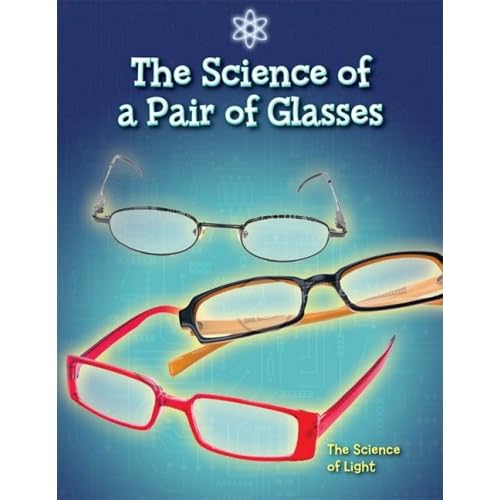 This book is an informational book about glasses and everything anyone could ever know about them! It contains information about how glasses are made, how glasses work with light, how the eyes and brain function together, how to protect your eyes, the history of glasses, and much more. I like this book in particular because it has a wealth of information that is presented in a fun and attractive way. The reader-friendly pages are laid out nicely and have photographs that nicely accompany the text. The facts given are interesting and the diagrams help readers sort out the information. This book would be great for an older reader (maybe 5th or 6th grade) because there are longer paragraphs and there is a lot of text on each page. I like that it has vocabulary words in bold. This would help students pick out words that may be difficult to them and study their definitions using the glossary at the end of the book. In the classroom the teacher could even use some of these words on their weekly spelling tests. I also liked that this book has a section where students can find resources to get more information. Many times books give their information and that's all. This book, however, takes the reader above and beyond to show them links to websites that would be useful to help them investigate more in-depth. Overall this book is a great one for those who are interested in glasses and sight!
Sunday, February 14, 2010
"Animal Baths: Wild & Wonderful Ways Animals Get Clean!" by Beth Fielding
 Animal Baths is a funny book that describes the many ways that animals keep themselves clean. From baths for Praying Manti to those for Antelope or Coral, this book describes all types of baths imaginable! I liked that the author appealed to a child's perspective through the vocabular and expressions she used. For example, she relates a bath in poop to a child being bathed by their mother in a tub with shampoo and a washcloth. All children can relate to taking a bath so it's interesting to have the author compare the different types to what is "normal" for a child to do to get themselves clean. As a picture book written with chapters, the reading level of this book is more advanced, but younger readers would definitely love the content. In the classroom this book could be used for an inquiry unit about bathing. I know that inquiry-based lessons are the most valuable to students and this might be a topic that is very interesting to some students. Overall, this book is a great one because of its humor, amazing content, and quirky subject matter!
"Corn" by Gail Gibbons
 This is a unique informational, non-fiction book that is entirely about corn. The attractive illustrations and interesting facts highlight the history, uses, types and growth of corn in a child-friendly manner. The labeled diagrams are useful for younger readers while the history, planting and harvesting descriptions may be more suitable for older readers. In the classroom this book could be used to spark inquiries about the different indians who used corn and what they used it for, the uses for corn today, the different types of corn and their similarities/differences, and so much more. I think that many people overlook the importance of corn and many children don't realize how important corn is for many everyday processes in today's society. The design of the cover is nice because the title is written in big letters spelled out with kernels of corn. The bright colors are what drew me in to take this book off the shelf, and I was very pleased to have read it. I learned a lot about corn that I had not known before. It really isn't just a crop that takes up a large portion of Iowa's farmland! Overall this children's book is a must-read, especially for those living in the Midwest.
Tuesday, February 9, 2010
"Judy Moody Gets Famous!" by Megan McDonald
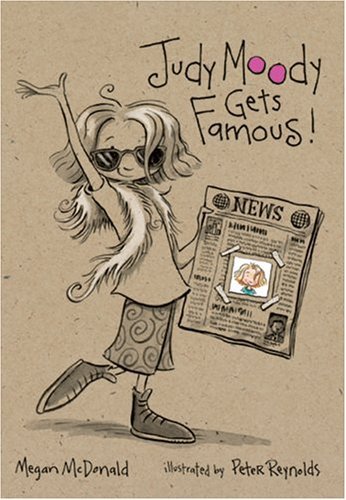
This is a cute fiction novel about a girl named Judy Moody who wants to do something that will make her famous. All of her friends have been in the newspaper or are "famous" for something and she feels as though she is the only one who has not done anything outrageous. After failing at several attempts to expose herself to the newspaper she meets a girl at the hospital. This girl had a heart transplant and spends many hours of her days in the hospital's playroom playing with broken toys. Judy doesn't think this is right so she takes the broken dolls home and fixes them up. After mailing a box back to the hospital without a return address she sees an article in the newspaper about the "Phantom Doll Doctor". In the end Judy is so excited to be famous and she's proud that no one even knows who fixed the toys. I think this is a great story because many children believe that there is nothing "special" about them. They see unique things that their friends do and never realize the extras they do in their own life. Although this book is geared more for girls, the message applies to both genders. I liked that throughout the book there were a few sketches of the characters in the scenes that were being described. Another really useful thing in this book is the character map at the beginning. This is great because a problem that many young readers have is keeping several characters straight. This way if they get confused they are able to flip back to the beginning and figure out who is who! Overall a funny story with a great message!
"The Champion of Children: The story of Janusz Korczak" by Tomek Bogacki
 The story of Janusz Korczak is inspiring and this nonfiction book highlights key parts of his life and describes his passion for helping children. Korczak was a Jewish man who grew up under tsarist Russia and was severely distrubed by the way many children were treated. Throughout his life he was a tutor to help support his family, then later a doctor during the Russo-Japanese War, a writer of children's books, and a children's rights advocate. He opened two orphanages and taught the children forgiveness and how to be self-sufficient. During World War II Korczak and his children in the orphanage were required to move to the ghetto. A couple years later they had to move to concentration camps, leading to his death. The dedication of Korczak to the children is inspiring. I think that by reading this book to students they could gain insight into life during tsarist Russia and World War II. They may also enjoy the connection to children that this book has and learn to appreciate what Korczak did throughout his life. This book has beautiful illustrations and is written as though it is a story. Many nonfiction books list facts while this one dives deeper and turns this man's life into a story.
 "Our Enduring Spirit: President Barack Obama's First Words to America" By Barack Obama (Illustrated by Greg Ruth)
 This nonfiction book makes the words and message of President Barack Obama's inaugural address come to life. To many children the address may have been confusing and they might not have understood what it meant. This book, although it doesn't change any of the words that Obama said, uses illustrations to accompany and describe his intentions. The sketches and vivid colors on each page depict everything from the White House to soldiers fighting at Gettysburg to Obama's silhouette and so much more. By breaking down the address and reading it more slowly and looking at the pictures children would be able to understand the importance of it and the inspiration that it gave to many people. It also describes a lot of our nation's history: battles fought, issues overcome in our country, and sacrifices people have made to make America the country that it is today. As a teacher I could definitely see myself reading this book to my students to discuss not only the importance of the inaugural address but the historical significance of Barack Obama being elected as our President. At the end of the book the illustrator, Greg Ruth, wrote a note to the reader describing his journey with the book. I found it very inspirational and I think it explains why this is not just another book about Barack Obama.
 Sunday, February 7, 2010
"Amelia's Notebook" by Marissa Moss
 This is a very creative book written in the first person as "Amelia". She is given this notebook as a present from her mom when they move to a new town. Amelia uses the notebook as a type of journal. I think this would be a good book to read to students at the beginning of the year before introducing writer's notebooks. I like how Amelia uses pictures and drawings to make her ideas more clear. This could be a way for students to incorporate art into their writing. The book is written on what looks like lined notebook paper and the font looks like actual handwriting. I was immediately interested in the book when I opened it. It reminded me of journals and notebooks that I had when I was younger. Amelia writes stories in her notebook too. This would give students ideas for things to write in their writer's notesbooks. Although this book would probably appeal more to girls, the boys might appreciate the pictures and layout of the book. Overall I think this is a really fun book and it shows students how they can use their writing to document their lives.
 "Stars" by Stevee Tomecek
 This book is a National Geographic series book. It is a non-fiction book all about stars and their properties. Although it is written for ages 4-8 I think that this book could definitely be used with older kids. I liked that the information was presented in an interesting way. The illustrator, Sachiko Yoshikawa, did a good job using bright colors to keep the illustrations interesting. Many of the pictures really helped diagram what was being explained about the stars. For example, the constellation Orien's Belt was shown and an image of a man was put over it so it is easier to make out the image that the constellation conveys. At the end of the book there is a science experiement to try. This is a great resource for teachers as you have pretty much an entire lesson laid out with this book. First you could read the book to students, then have them do the experiment.
Grandpappy Snippy Snappies by Lynn Plourde

From the bright and colorful illustrations to the clever wording and silly nature of this book I was thoroughly entertained throughout the entire story. It is about Grandpappy, who snaps his suspenders and saves the day. He rescues cows stuck in the mud, the sheriff's car from a stack of hay bales, the derailed mail train, and Grandmammy from a flock of crows. The situations are funny and the reader never knows what he's going to have to rescue next. The text is written in a very creative way. The words are curved, slanted, big, small, bold, italicized, and everything in between. There is a lot of alliteration, which makes it fun to read out loud. Plourde incorporates opposites in an interesting way, so children who are just learning would benefit from having this book read to them. The layout of this book is interesting because the dedication and copyright information is listed on the last page of the book. In most books this information is written at the beginning. The layout is also interesting because the words are written all over the pages, not just in simple lines at the top or bottom.
Subscribe to:
Posts (Atom)