In the Night Kitchen is a controversial children's book due to it's illustrations of a nude little boy; however, I believe that it a completely apppropriate book for children. I believe that sensoring a book depicting a nude child is ridiculous and that elementary-aged children are old enough to handle it. Exposing children to the "truth" about how humans were created will only help deepen their knowledge about mankind. Nudity is a controversial topic, and I think that it has to be analyzed in a case-by-case manner. Extreme nudity and nudity of adults is probably not something I would want in books in my classroom, but I think it just depends on the book and how the nudity is being depicted. In this book I think that the child is naked because he gets really messy. It wouldn't make sense for him to keep his clothes on when he's swimming in milk and sitting in a cake! Overall, this book is definitely one I would feel comfortable having in my classroom.
Sunday, February 28, 2010
"Where the Wild Things Are" by Maurice Sendak
Where the Wild Things Are is a controversial book in children's literature. It is criticized as being too violent and scary for young readers. I agree that several of the illustrations may frighten children -- they picture monster-like creatures with fangs, claws and yellow eyes. The child is also shown doing violent activities, like hammering a nail into the wall (something children should not be allowed to do) and chasing his dog with a sharp fork. Sendak also includes some hints of child abuse in this book. The boy is naughty so he is sent to bed without his dinner and his mom calls him "Wild Thing". I believe that children should not have meals taken away as a punishment and it really bothers me that that is the way the child is treated in this book. This is probably not a book that I would like to have in my future classroom, simply because it is violent and I would not want my students to feel frightened/threatened in any way in my classroom.
Sunday, February 21, 2010
"The Giver" by Lois Lowry
This book looks at a "perfect" society that runs smoothly and makes the reader question what is so valuable about having conflict and suffering in the world. Readers may find themselves wondering why a community like Jonas' would be a bad idea. Although this book receives a lot of criticism when it is incorporated into a curriculum based on content and age-appropriateness, I believe that it is a valuable book for students in upper elementary to read and can definitely see myself teaching this book in my classroom. It is a great book for analyzing setting and looking at symbolism. The overall idea of "freedom" could be analyzed -- what does it really mean to be free? What does it mean to be an individual? How do our past experiences shape who we are? What is diversity, and how is a world conformed to "sameness" diverse? Students could also discuss the advantages and disadvantages of a community like Jonas'. Personally, I am not one who usually enjoys science fiction novels but this one definitely changed my opinion of them. I think that, in general, many female students feel similar about science fiction books. The Giver may help them open their eyes and accept science fiction as a more enjoyable genre.
Overall, after finishing this book I felt thankful. I was thankful for family and love, even though with them comes suffering and injustice. I was thankful that our society is not reduced to "sameness" and that we can embrace our differences and individuality. Our experiences, both good and bad, shape who we are and affect our thoughts and opinions, and in a different world we would not be the people we are today.
“Miss Mingo and the Fire Drill” by Jamie Harper
I chose this book because it reminded me of a student I work with at a daycare. One morning the fire alarm was being tested and it went off about five times. That morning the child was extremely scared and didn’t understand what was happening or why fire alarms were necessary. This would be a good book to read to students before a fire drill happens, to help them understand the importance of working fire alarms. It describes fire safety in a serious tone, but lightens the mood by having animals as main characters. I liked that each page described what each different animal does when it is frightened or when danger approaches. In the classroom it would be useful to read this book then go over the standard fire drill procedure for the classroom and practice what the students would do. It would be useful to show students the diagram of the fire exit path for their school in relation to the one for Miss Mingo’s class in this book. Overall I think this book would be very useful for teachers to read to their students before reviewing their classroom’s fire drill procedure. Also, it would have been very helpful for the student at the daycare I work at because he would have had a better understanding of what is going on, and the purpose of why we have fire drills.
“Teacher!” by Patricia Hubbell
I picked this book because of the title. I liked that this was a book about what teachers do and how they help their students in the classroom. I enjoyed reading it because it described the things that most children probably recognize about teachers: tying shoelaces, printing names, joining show-and-tell, counting money, and singing songs. A big thing this book helped me realize is that it’s the small things that teachers do that students really notice and appreciate. In the future they aren’t going to remember what teachers read well from textbooks as well as those who played with them on the playground and taught them to work together. As important as the curriculum is, I think that the most important part of teaching is connecting with each student individually. The reading level of this book is probably for Kindergarten or first grade. I think it would be a good book for parents to read to their children before they start Kindergarten. It would probably help answer some of their questions about what teachers do and how their school day is going to go.
“Starring Lorenzo and Einstein too” by Mark Karlins
I chose to read this book because the title gave me the impression that math would be involved. I am a math specialization so I am always interested in reading books that incorporate math and famous mathematicians with literature. It is important to incorporate a variety of sign systems when teaching, and by combining literature with math that can be accomplished. This book is about a boy names Lorenzo who loves to do math. All the other members of his family are performers in the theatre and don’t understand why Lorenzo isn’t good at performing, too. Lorenzo begins to feel isolated and that he doesn’t fit in when Einstein discovers him at one of his family’s shows. Lorenzo and Einstein become friends and talk about math and travel through space together. In the end Lorenzo misses his family so they return to Earth where he and his family realize that he really does fit in and that not all of the Fortunatos have to be performers. I liked this book because it brought in themes about parent expectations and being true to yourself. Many children may face challenges at home based on the expectations that their parents hold of them. I believe that it’s important to teach students individuality and that it’s ok to be different. This book incorporates these themes with math and literature, a great book for multiple sign systems!
“Tyrannosaurus Math” by Michelle Markel
This is another book that mixes math with literature. This is a great book for introducing several math strategies to students. In this book there is a Tyrannosaurus named T-Math. He is very good at math and uses it all the time. On the last page of this book is a list of all the math skills that T-Math uses. From addition and subtraction to skip counting, symmetry, graphs, arrays, estimation, and much more, this dinosaur gives examples of several math strategies. I think this book could be very useful in the math classroom as it gives examples of necessary math skills. I could see myself using sticky notes to cover up numbers or other parts of the problems shown in the book and having my students do the problems to figure out the missing part. I liked that there was a pronunciation guide on the first page to help readers say the names of the dinosaurs correctly. This is definitely a book I would like to have in my future math classroom!
“The Secret Plan” by Julia Sarcone-Roach
This book captured my attention through its unique characters, plot and illustrations. The main characters are three cats and an elephant, whose playing always get interrupted when it’s time to go to bed. They devise a plan to pretend to go to sleep, then get up and go play in the attic. The illustrations were made with acrylic paint, giving them a distinctive look. There are several shades of each color used, drawing the reader in to the images. I liked that Sarcone-Roach decided to use text in various ways. The layout of the text varies by page; sometimes it is written in straight lines at the top of the page, while other times there is only one word per line and they descend downward as the cats walk down the steps. The usage of dialogue bubbles marks when the parent is shouting demands to end their playtime. Words such as “lunch,” “dinner,” and “bedtime” are all written in dialogue bubbles. I think children would enjoy this book because it has animals as main characters instead of people, and many of them would probably relate to not wanting to stop playing when it’s time to go to bed.
Monday, February 15, 2010
"Tokyo Mew Mew 1" by Mia Ikumi and Reiko Yoshida
Honestly, when I picked up this book I felt nervous and overwhelmed. It took me a while to get used to reading it from the back to the front, and from the right to the left. After initially feeling confused, I got used to the manga style and enjoyed reading this different type of comic book! Tokyo Mew Mew is a series about a girl named Ichigo. The book that I read was about Ichigo and several of her friends’ involvement in the Mew Project. This secret project mixes animal DNA with that of humans. As the first manga I have ever read, it has convinced me that this genre is one I should explore more. I liked the illustrations a lot and they really helped me understand exactly what was going on throughout the book. Inside the back cover (which is the front cover for us who are not used to this style of book) there is a page that says “STOP! This is the back of the book. You wouldn’t want to spoil a great ending!” I think this was really useful and helps those who are unfamiliar with manga to be successful in reading this book. This page also included directions on how to read manga-style books. Overall, I liked reading Tokyo Mew Mew and have much more confidence in reading manga, which is something I would like to do more often!
"Life in a Coral Reef" by Wendy Pfeffer
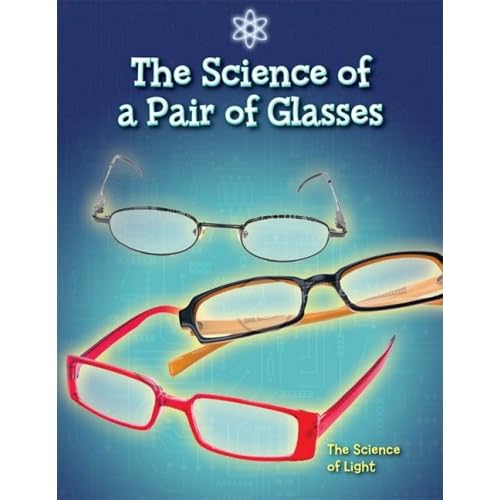
"The Sciece of a Pair of Glasses" by Brian Williams
Sunday, February 14, 2010
"Animal Baths: Wild & Wonderful Ways Animals Get Clean!" by Beth Fielding
"Corn" by Gail Gibbons
Tuesday, February 9, 2010
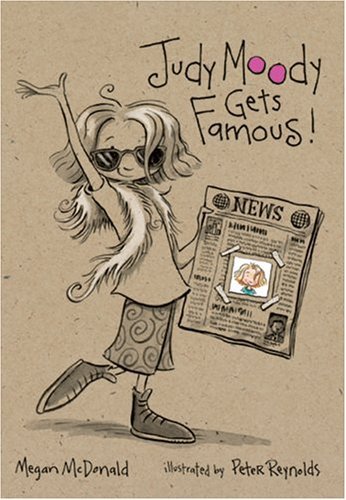
"Judy Moody Gets Famous!" by Megan McDonald
This is a cute fiction novel about a girl named Judy Moody who wants to do something that will make her famous. All of her friends have been in the newspaper or are "famous" for something and she feels as though she is the only one who has not done anything outrageous. After failing at several attempts to expose herself to the newspaper she meets a girl at the hospital. This girl had a heart transplant and spends many hours of her days in the hospital's playroom playing with broken toys. Judy doesn't think this is right so she takes the broken dolls home and fixes them up. After mailing a box back to the hospital without a return address she sees an article in the newspaper about the "Phantom Doll Doctor". In the end Judy is so excited to be famous and she's proud that no one even knows who fixed the toys. I think this is a great story because many children believe that there is nothing "special" about them. They see unique things that their friends do and never realize the extras they do in their own life. Although this book is geared more for girls, the message applies to both genders. I liked that throughout the book there were a few sketches of the characters in the scenes that were being described. Another really useful thing in this book is the character map at the beginning. This is great because a problem that many young readers have is keeping several characters straight. This way if they get confused they are able to flip back to the beginning and figure out who is who! Overall a funny story with a great message!
"The Champion of Children: The story of Janusz Korczak" by Tomek Bogacki
"Our Enduring Spirit: President Barack Obama's First Words to America" By Barack Obama (Illustrated by Greg Ruth)
Sunday, February 7, 2010
"Amelia's Notebook" by Marissa Moss
"Stars" by Stevee Tomecek
Grandpappy Snippy Snappies by Lynn Plourde
From the bright and colorful illustrations to the clever wording and silly nature of this book I was thoroughly entertained throughout the entire story. It is about Grandpappy, who snaps his suspenders and saves the day. He rescues cows stuck in the mud, the sheriff's car from a stack of hay bales, the derailed mail train, and Grandmammy from a flock of crows. The situations are funny and the reader never knows what he's going to have to rescue next. The text is written in a very creative way. The words are curved, slanted, big, small, bold, italicized, and everything in between. There is a lot of alliteration, which makes it fun to read out loud. Plourde incorporates opposites in an interesting way, so children who are just learning would benefit from having this book read to them. The layout of this book is interesting because the dedication and copyright information is listed on the last page of the book. In most books this information is written at the beginning. The layout is also interesting because the words are written all over the pages, not just in simple lines at the top or bottom.
Subscribe to:
Comments (Atom)